
Excerpt from section 8 of the London Baptist Confession of Faith of 1689.
- It pleased God, in His eternal purpose, to choose and ordain the Lord Jesus, His only begotten Son, in accordance with the covenant made between them both, to be the Mediator between God and man; to be Prophet, Priest, and King, the Head and Saviour of His Church, the Heir of all things, and the Judge of all the world. To the Lord Jesus He gave, from all eternity, a people to be His seed. These, in time, would be redeemed, called, justified, sanctified, and glorified by the Lord Jesus.
- The Son of God, the second person in the Holy Trinity, being true and eternal God, the brightness of the Father’s glory, of the same substance and equal with Him;- Who made the world, and Who upholds and governs all things which He has made,- did, when the fullness of time had come, take upon Himself man’s nature, with all its essential properties and common infirmities, with the exception of sin.- He was conceived by the Holy Spirit in the womb of the Virgin Mary, the Holy Spirit coming down upon her and the power of the Most High overshadowing her, so that He was born to a woman from the tribe of Judah, a descendant of Abraham and David, in accordance with the Scriptures.- Thus two whole, perfect and distinct natures were inseparably joined together in one person, without conversion, composition, or confusion;- So that the Lord Jesus Christ is truly God and truly man, yet He is one Christ, the only Mediator between God and man.
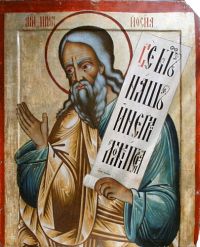 This past week, I’ve been reading through Hosea. The language God uses to speak of Israel is quite striking. “For a spirit of whoredom has led them astray, and they have left their God to play the whore” (Hosea 4:12). The Lord, over and over in this book, describes His relationship with Israel as that of being married to a whore. And not just a one time affair or adulterous short-term fling. It is serial adultery He speaks of, a pursuit after whoredom. That is strong language to describe Israel’s unfaithfulness.
 While many are well-intentioned in saying, “I hate religion, but I love Jesus,” or, “It’s not about a religion but a relationship [with God],” it seems the word ‘religion’ itself has come under intense fire as a source of all kinds of evil, particularly amongst the evangelical landscape. There is some validity to this assumption looking back upon our history as fallen sinners (or even the present day), where in the name of religion, many horrible things have been done to others. And in the last 50 years there is more weight given to this view that the concept of religion is a bad thing based upon the kinds of Christian groups who picket absolutely everything the world does they don’t like, or which threaten their reign on things of this world.
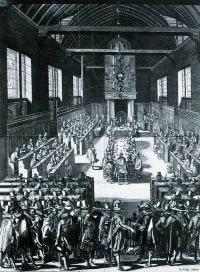 This is an excerpt taken from the