

Gospel. Culture. Technology. Music.

Category: Theology Page 44 of 67


Why is Doctrine So Important?

“And what I do I will continue to do, in order to undermine the claim of those who would like to claim that in their boasted mission they work on the same terms as we do. For such men are false apostles, deceitful workmen, disguising themselves as apostles of Christ. And no wonder, for even Satan disguises himself as an angel of light. So it is no surprise if his servants, also, disguise themselves as servants of righteousness. Their end will correspond to their deeds.” – 2 Corinthians 11:12-15

“Beloved, although I was very eager to write to you about our common salvation, I found it necessary to write appealing to you to contend for the faith that was once for all delivered to the saints. For certain people have crept in unnoticed who long ago were designated for this condemnation, ungodly people, who pervert the grace of our God into sensuality and deny our only Master and Lord, Jesus Christ.” – Jude 3-4

“Let no one deceive you with empty words, for because of these things the wrath of God comes upon the sons of disobedience.” – Ephesians 5:6

One of the primary ways Satan works to destroy the church is not through the persecutions from outsiders like secular relativists in the public square (like here in the West), or oppressive governments (like in Indonesia), although Satan does that of course too. But the primary way Satan works to destroy the church is from the inside out. He shows himself as an angel of light to believers, working in the “sons of disobedience” (Ephesians 5:6) to introduce a message that is similar to (sometimes blatantly opposed), but not quite the Gospel. How does he do this? He does it the same way he did it in the Garden of Eden with Eve. Let’s review:

Now the serpent was more crafty than any other beast of the field that the LORD God had made. He said to the woman, “Did God actually say, ‘You shall not eat of any tree in the garden’?” And the woman said to the serpent, “We may eat of the fruit of the trees in the garden, but God said, ‘You shall not eat of the fruit of the tree that is in the midst of the garden, neither shall you touch it, lest you die.'” But the serpent said to the woman, “You will not surely die. For God knows that when you eat of it your eyes will be opened, and you will be like God, knowing good and evil.” – Genesis 3:1-5

Pay close attention to what Satan is doing here. Does he outright attack Eve physically and persecute her, or does he start bashing God in her presence? No, he is much more crafty than that. Rather, he just changes words around that God spoke concerning the tree they were not to eat of. He changes the nature of God’s statements (the doctrine God spoke beforehand concerning the tree) just enough to derail her from staying the course and not eating of the fruit. And then Satan adds in an appeal that she will become like God and her eyes will be opened. Who wouldn’t want that? And Eve succumbed to the temptation.

In the same way as in the garden, Satan works in the “sons of disobedience” to go into churches as false teachers, false pastors, speaking something that sounds like the truth, using the same Christian phrases, tickling the hearers ears, giving them a warm fuzzy and affirmation they are on the right path when they are being derailed from the Gospel altogether. Most of the warnings given to the readers of various letters in the New Testament are to watch out and be on guard against those who speak false truths. 1 John is riddled with these warnings. The book of Jude is a warning in itself against those creeping into the church posing as true teachers of the Gospel. So this very thing has been going on from the beginning of the church.

You could think of this activity of Satan like a Trojan horse, sent into a city as a gift, and then those pernicious warriors inside the horse burst out, bringing the whole city down from within. So it is with the church. Satan actively works to bring down the church from within by sending “messengers of light” who speak a half-truth which, as shown from history, is an utter and total lie. Legalism, Gnosticism, Arianism, Pelagianism, Socinianism, Sabellianism, amongst others, are all heresies from church history proving this to be the case, where people from within the church bring in false teachings and errors, straying from the truth of the Scriptures, and so bring condemnation on themselves and those who adhere to their message; and this because they have believed a lie from Satan. And these errors were the very reason the church, in all ages for 2000 years, have defined (in confessions and declarations) the things they authoritatively believed to be what the Scriptures taught against these errors. Jude goes on to poetically describe these people’s fate, and it is just awful:

But these people blaspheme all that they do not understand, and they are destroyed by all that they, like unreasoning animals, understand instinctively. Woe to them! For they walked in the way of Cain and abandoned themselves for the sake of gain to Balaam’s error and perished in Korah’s rebellion. These are hidden reefs at your love feasts, as they feast with you without fear, shepherds feeding themselves; waterless clouds, swept along by winds; fruitless trees in late autumn, twice dead, uprooted; wild waves of the sea, casting up the foam of their own shame; wandering stars, for whom the gloom of utter darkness has been reserved forever. – Jude 10-13

Satan’s primary way of destroying the church and dividing it is by bringing in false doctrine that appears to be of the truth, even using scripture to attempt to back up their theology (albeit out of context usually), and is yet totally a different gospel. And Satan does this both slow at times and fast at others. The slow moving false truths start out as changing something that seems minute, may not be a big issue of controversy at the time. There are usually a small minority of people who warn and argue against this small error, seeing the potential for decay down the road. Most ignore them though and tell them they are just too critical. Then those adhering to this “small” truth, take it a step further, and a step further, and on and on it goes over time, until there is blatant heresy in the church itself, hindering people from the truth of the Gospel, so as people might be saved. Other times though, the error slips in at an extremely fast rate, and people wholeheartedly take it in, without a second thought. Fortunately though, this type of error doesn’t last a long time and fizzles out pretty fast because of the quickness of which people bought into it. Somehow though it seems to reemerge at some point later on, in a different form.

It is sad, but the American church is flooded with these very pastors and teachers, presuming to be proclaimers of the Word of God, the Gospel, who speak a ton of half-truths, which amount to declarations that undermine the progress of the Gospel.

One blatant form of this teaching is the prosperity gospel, or health and wealth gospel. It’s leaders make the aim of the Christian faith your abundance, happiness, and prosperity in this life, using God as a means to your own materialistic, idolatrous end. God is turned into a fortune cookie of sorts. And this message is being spread (under the guise of the Gospel) in Africa at an alarming rate. Man this breaks my heart!

Another false gospel is that of liberal mainline churches. Their gospel is that Jesus lived and died on the cross merely as an example. While evangelicals hold it as certainly an example of Christ’s love and how we should imitate Him in that, oh how much infinitely more than this was the work of Christ! This is the half-truth thing I was talking about. Though the nature of their message has changed from modernist times, where people totally discounted the supernatural based on science, their message amounts to the idea that Jesus was just basically an amazing teacher, someone worth following as an example. And so they omit the idea that Jesus is also God. They omit the nature of the atonement as being an effectual substitutionary sacrifice. They omit the idea of the resurrection … on and on it goes of things they omit as essential to the faith. This guts the Gospel of any supernatural power needed in order that people would be born again as a result of the Holy Spirit working in a Biblical message.

Now the next movement or collective thinking that is good in some ways and bad in others is the Emerging Church. The good that the movement (or conversation, whatever you want to call it) has brought to the church is addressing the issues within the mega-church circles. I am in agreement with their assessments concerning these things. However, just like their parent liberal theology in attempting to accommodate the culture in the church, so also many within the Emerging movement are accommodating postmodern thinking as the means to reach the culture. It looks like a great idea, and yet this is the very thing Jude, John and Paul all warned their readers (and us) of; people slipping in unnoticed, bringing in destructive heresies that hinder the Gospel, instead of progressing it. We must not compromise the truth of the Scriptures and its message, the Gospel.

These quotes really hit the nail on the head concerning the church using discerning judgment as well as what the purpose has been throughout the history of the church in writing up creeds and doctrinal statements:

A shepherd protects his sheep from their enemies. Wolves enter in among the sheep. The wolves which harass the church of God are emissaries of false doctrine and of evil practice. Satan is never out of his diocese and his specialty is to destroy the pure witness and the fellowship of the church of God. Perhaps there is no more ominous feature of members of the church than the lack of discernment; they can listen to what is good and true, and to what is bad and false, without discrimination. If we are to live in a world where the enemy is active and error is rampant, we must be imbued with a good measure of critical faculty, and here the elders in tending the flock must cultivate for themselves, and inculcate in the members of the church, that sensitivity to truth and right, so that they and the people will be able to detect the voice of the enemy.

Jesus said of His sheep, “a stranger will they not follow, for they know not the voice of strangers” (John 10:5). But this discernment does not operate in a vacuum, and it does not act mechanically; it acts in the context of intelligent apprehension and understanding of the truth.”

– John Murray
——————————————–

A Creed, or Rule of Faith, or Symbol, is a confession of faith for public use, or a form of words setting forth with authority certain articles of belief, which are regarded by the framers as necessary for salvation, or at least for the well-being of the Christian Church.

A creed may cover the whole ground of Christian doctrine and practice, or contain only such points as are deemed fundamental and sufficient, or as have been disputed. It may be declarative, or interrogative in form. It may be brief and popular (as the Apostles’ and the Nicene Creeds), for general use in catechetical instruction and at baptism; or more elaborate and theological, for ministers and teachers, as a standard of public doctrine (the symbolical books of the Reformation period). In the latter case a confession of faith is always the result of dogmatic controversy, and more or less directly or indirectly polemical against opposing error. Each symbol bears the impress of its age, and the historical situation out of which it arose.

There is a development in the history of symbols. They assume a more definite shape with the progress of biblical and theological knowledge. They are mile-stones and finger-boards in the history of Christian doctrine. They embody the faith of generations, and the most valuable results of religious controversies. They still shape and regulate the theological thinking and public teaching of the churches of Christendom. They keep alive sectarian strifes and antagonisms, but they reveal also the underlying agreement, and foreshadow the possibility of future harmony.

– Philip Schaff

Two modern day declarations and confessions for our time are the Together for the Gospel statement of 2006 as well as the Cambridge Declaration of 1996. Both of these address modern day errors that have crept in and we would all do well to read and understand what is said in these statements. As Jude says, “contend for the faith that was once for all delivered to the saints,” and may we hold to our doctrine even though it is not popular in order that the Biblical Gospel may be proclaimed in our land of compromise.

Related links:

A Survey of Heresies – Phil Johnson
Bad Theology Section on Monergism.com
Satan Corrupts the Mind with Doctrinal Error – William Gurnall
Theology section of Westerfunk.net – Look for the section entitled, “Canons, Creeds, Confessions, and Declarations From Church History” and read through some of those declarations. So incredible for the strengthening of our faith!
What is Biblical Theology?

When I first heard this term a number of years ago, I thought it was making the statement, “This here is Biblical theology where as systematic and doctrinal theology is not.” I assumed this based on the anti-intellectualism that seems to characterize so much evangelicalism, where people say, “I don’t need doctrine or theology I just need what the Bible says.” Soon did I realize the phrase Biblical theology had nothing to do with this. In sum, Biblical theology deals with the linear, historical progression of God’s revelation of redemption, summed up in Jesus, culminating at the end of the age when God judges the world in Christ. Instead of systematic theology, where we go through and categorize specific doctrines (the nature of God, the trinity, atonement, resurrection, election, church government, etc), Biblical theology entails these things, but more specifically within the context of history, and even broader than that what God is doing and has done in history to bring about redemption. This approach to Scripture is highly important in preaching and teaching so that we see the fullness of what God is doing in proclaiming His glory and perfect righteousness to a dying world. Here are a couple of quotes on Monergism.com’s section on Biblical theology that gives a very good explanation:

Kerux – A Primer on Biblical Theology

Biblical Theology approaches the Bible as an organic drama of God’s unfolding revelation through history. In distinction from doctrinal or systematic theology, biblical theology follows the progressively unfolding revelation of God’s words and deeds through history. This linear aspect of revelation unites each revelatory event and proclamation both retrospectively and prospectively. Geerhardus Vos described the organic continuation of revelation in history as a flower expanding from bud to blossom. The blossom is retrospectively united to the bud; the bud is prospectively united to the blossom. One of the tasks/privileges of the interpreter of Scripture is to draw out these organic prospective and retrospective relationships. At the center of this organic unity is the person and work of our Savior, Jesus Christ. Even as our Risen Lord related all of Scripture retrospectively and prospectively to himself (Luke 24:27), so Reformed biblical theology is preeminently Christocentric.

God spoke into history; God acted in history; God was incarnated in history. Vos described this vertical interface with history as the eschatological penetration of the history of redemption. In fact, Vos approached Scripture from the standpoint of the priority of the eschatological. Overarching the entire history of redemption was the eschatological arena. Every revelation of God in history was an invitation for the creature to possess the arena of the Eschatological/heavenly. This would only be accomplished through the saving work of the Son, Jesus Christ. Hence, Christ was eschatologically revealed throughout the history of redemption as the promised seed of the woman, seed of Abraham, seed of Jesse, etc. Even as God and man met in Jesus Christ, so the eschatological and the linear met at every point of God’s special revelation.

Graeme Goldsworthy – Preaching the Whole Bible as Christian Scripture

From the evangelical preacher’s point of view, biblical theology involves the quest for the big picture, or the overview of biblical revelation. It is of the nature of biblical theology that it tells a story rather than sets out timeless principles in abstraction. It does contain many timeless principles, but not in abstract. They are given in an historical context of progressive revelation. If we allow the Bible to tell its own story, we find a coherent and meaningful whole.

9Marks Ministries Introduction page to Biblical Theology:
http://marks.9marks.org/Mark2/LessonA/Slide1of1

Here is a link to Monergism’s page on Biblical theology:
http://www.monergism.com/directory/link … -Theology/

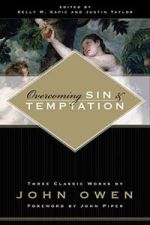
Finished up Overcoming Sin and Temptation, Moving on to Peace Child

After pro-longing my reading of Overcoming Sin and Temptation with the coming of our new born son Grayson, I finally finished it up. What an amazing unfolding of the effective power of sin in the lives of true believers, professing hypocritical believers (unbelievers), and blatant unbelievers. This book is by far the best treatment of the doctrine of sin I have ever read. I highly recommend it! If you want to read some quotes, just type in “Overcoming Sin and Temptation” or “John Owen” to the Search bar above (minus the quotes of course).

Now I’m moving on to Peace Child by Don Richardson. Here is a great description of the book off of Amazon:

“In 1962, Don and Carol Richardson risked their lives to share the gospel with the Sawi people of New Guinea. Peace Child tells their unforgettable story of living among these headhunters and cannibals who valued treachery through “fattening” victims with friendship before the slaughter. God gave Don and Carol the key to the Sawi hearts via a redemptive analogy from their own mythology. The “peace child” became the secret to unlocking a value system that existed through generations over centuries, possibly millenniums, of time. This analogy became a stepping-stone by which the gospel came into the Sawi culture and started both a spiritual and a social revolution from within. With an epilogue updating how the gospel has impacted the Sawi people, Peace Child will inspire a new generation of readers who need to hear this unforgettable story and the lessons it teaches us about communicating Christ in a meaningful way to those around us.”

On the Power of Sin in Unbelievers – John Owen

“It is indwelling sin that both disenables men unto and hinders them from believing, and that alone. Blindness of mind, stubbornness of the will, sensuality of the affections, all concur to keep poor perishing souls at a distance from Christ. Men are made blind by sin, and cannot see his excellencies; obstinate, and will not lay hold of his righteousness; senseless, and take no notice of their own eternal concerns. Now, certainly that which can prevail with men wise, and sober, and prudent in other things, to neglect and despise the love of God, the blood of Christ, the eternal welfare of their own souls, upon weak and worthless pretenses, must be acknowledged to have an astonishable force and efficacy accompanying it. Whose heart, who has once heard of the ways of God, can but bleed to see poor souls eternally perishing under a thousand gracious invitations to accept of mercy and pardon in the blood of Christ? And can we but be astonished at the power of that principle from whence it is that they run headlong to their own destruction? And yet all this befalls them from the power and deceit of sin that dwells in them.”

(Excerpt from Indwelling Sin in the book Overcoming Sin and Temptation (PDF) by John Owen, p.393)

Negligence of Private Communion with God – John Owen

“[Indwelling sin] works by negligence of private communion with God in prayer and meditation. I have showed before how indwelling sin puts forth its deceitfulness in diverting the soul from watchfulness in and unto these duties. Here, if it prevails, it will not fail to produce a habitual declension in the whole course of obedience. All neglect of private duties is principled by a weariness of God, as he complains, “You have not called upon me, you have been weary of me” (Isa. 43:22). Neglect of invocation proceeds from weariness; and where there is weariness, there will be withdrawing from that whereof we are weary. Now, God alone being the fountain and spring of spiritual life, if there be a weariness of him and withdrawing from him, it is impossible but that there will a decay in the life ensue. Indeed, what men are in these duties (I mean as to faith and love in them), that they are, and no more. Here lies the root of their obedience; and if this fails, all fruit will quickly fail. You may sometimes see a tree flourishing with leaves and fruit, goodly and pleasant. After a while the leaves begin to decay, the fruit to wither, the whole to droop. Search, and you shall find [that] the root, whereby it should draw in moisture and fatness19 from the earth to supply the body and branches with sap and juice for growth and fruit, has received a wound, is [in] some way perished and does not perform its duty, so that though the branches are flourishing a while with what they had received, their sustenance being intercepted they must decay. So it is here. These duties of private communion with God are the means of receiving supplies of spiritual strength from him—of sap and fatness from Christ, the vine and olive. While they do so, the conversation and course of obedience flourishes and is fruitful—all outward duties are cheerfully and regularly performed; but if there be a wound, a defect, a failing, in that which should first take in the spiritual radical moisture, that should be communicated unto the whole, the rest may for a season maintain their station and appearance, but after a while profession will wither, fruits will decay, and the whole be ready to die. Hence our Savior lets us know: what a man is in secret, in these private duties, that he is in the eyes of God, and no more (Matt. 6:6); and one reason among others is, because they have a more vigorous acting of unmixed grace than any other duties whatsoever. In all or most particular duties, besides the influence that they may have from carnal respects, which are many, and the ways of their insinuation subtle and imperceptible, there is an alloy of gifts, which sometimes even devours the pure gold of grace, which should be the chief and principal in them. In these there is immediate intercourse between God and that which is of himself in the soul. If once sin, by its deceits and treacheries, prevails to take off the soul from diligent attendance unto communion with God and constancy in these duties, it will not fail to effect a declining in the whole of a man’s obedience. It has made its entrance, and will assuredly make good its progress.”

(Excerpt from Indwelling Sin in the book Overcoming Sin and Temptation (PDF) by John Owen, pp. 385-386)

The Insufficiency of Ourselves, The Life-Giving Power of the Spirit

“Such is the confidence that we have through Christ toward God. Not that we are sufficient in ourselves to claim anything as coming from us, but our sufficiency is from God, who has made us competent to be ministers of a new covenant, not of the letter but of the Spirit. For the letter kills, but the Spirit gives life.” (2 Corinthians 3:4-6)

As I’ve been reading through 2 Corinthians, I came across this passage, reading it over and over, and once again it struck me how much Paul saw everything in his and other believers lives as having come from God alone, not from ourselves. Jesus said, “It is the Spirit who gives life, the flesh is of no avail.” (John 6:63) If we are humble, that is a work of the Spirit. If we have faith, the same. If we repent of evil deeds, God graciously granted that very repentance. If we do good works to a dying world in order to proclaim salvation through Christ alone, we are not sufficient in ourselves to claim anything, including this, as having come from us, but from God sufficiently and effectively working in us to do that which is pleasing. If we feel pretty good about ourselves after having performed some service, is this not the mark of self-righteousness? This is opposed to the very thing Paul is saying here. Rather, we should rejoice in the work of God in us which gave rise to the accomplishing of the task.

In addition to this though, in Galatians 6:14, Paul saw every thing as coming from God directly connected with Christ as a blood-bought gift of the cross. We are not sufficient in ourselves to claim anything as coming from us, but in Christ alone is our sufficiency. Everything God demands of us (including faith, repentance, obedience to the law) is given in the work of Christ for us. If we have material blessings, obviously these are from God. But what about intelligence, knowledge, wisdom, spiritual insight into the things of Scripture? Do these not come from the sovereign hand of the Spirit who gives life, giving us understanding into that which we cannot understand of ourselves? What about trials for the sharpening of our faith, as the impurities are melted out of gold with fire? Is this not a gift of God, something to rejoice in, though our flesh may ache and groan? The gift of faith in Christ for salvation, spiritual eyes to see and ears to hear Christ, a hatred for unrighteousness? Where do all of these come from except from the infinitely loving and merciful hand of God toward wicked sinners who should eternally die in hell?

Christ’s work alone for me, not my works (both good or bad), change my perfect standing with God. Every day, every moment even, I have to repeat this idea that in no way am I sufficient in myself to claim any thing as coming from myself (this is pride and arrogance), but I can only boast in Christ, and His work on my behalf, having purchased for me all the panorama of blessings unto eternal life, from beginning to end. I am dependent upon Him even to grow in conformity to Christ. (2 Timothy 2:24-26) The knowledge of God’s working in me that which is pleasing to Him (greater faith, obedience, repentance) is so humbling, because in all reality He could have just left me to my sinful will, bound in unbelief and I know I would have stayed there, further hardening my heart toward His might, power and love. But He came in and freed me from my unbelief, in order that I may be saved through faith in Christ while I was dead in sin.

Lord God Almighty! May we rejoice together that our sufficiency is not from within ourselves, for salvation as well as growth in salvation, because what really can we claim as coming from ourselves? Nothing. We acknowledge that apart from your revelation into the truth of the Gospel in the Scriptures, we are poor, blind, and spiritually dead. Work in us to create in us clean hearts that are pleasing to You. We are desperate for You to change us that we may be satisfied by Your presence and witness, and acknowledge we have no hope apart from You working in us. Cleanse us by the blood of Christ, that we may be holy and pleasing to You in all of our ways.

“For from him and through him and to him are all things. To him be glory forever. Amen.” (Romans 11:36)

Democracy Makes For a Great Country, But Terrible Theology

The concept of democracy for a society, where the people rule the government and its leaders, has been a huge blessing to mankind in a world struck with unbelievable suffering at the hands of wicked men in power over people. One of the reasons democracy is so great is because of its checks and balances in place, where no one person or group gains control over others. And leaders only hold positions for a limited amount of time (as opposed to places like Cuba where Castro has been in power for decades). Within a democracy, instead of leaders being selected by a singular person or group in power (as in so many nations), leaders are selected by majority vote of the people. And this whole system works really well in a sinful, broken world.
One of the reasons communism will not ever work in the long-run is because of the sinfulness of man. I believe the fundamental idea of communism is great, where everyone gives of themselves for the benefit of everyone else. Sounds great! This is in fact what the first church did within the book of Acts. However, societies and cultures are made up of sinners, people who are greedy, lustful, selfish, arrogant, and unfortunately, someone or some group at some point assumes power over others and oppresses them. That is why I do not like the idea of communism in a sinful world: it will never ultimately work because of the proneness of men’s hearts to sin and assume power. However, a democracy, where everyone participates in the process, works great in a sinful world where people are greedy and want power over others. It keeps them from assuming that power. I’m thankful for this nation where we are not prevented from gathering together to worship Christ, to have Bible studies, and so on, being oppressed by people who hate us. Praise God for the political freedoms of this nation.

How does the idea of democracy make for terrible theology though? Think about this with me. We live in a society where being a self-starter is prized, looked upon with favor. Individualism, freedom, self-expression, just Self really, are encouraged and worshiped in our culture. If you pull yourself up out of some terrible, poverty-stricken situation, worked really hard to get through school, started a business, and you are now very successful (i.e. successful in worldly, monetary terms), you are worshiped as an icon of what good, honest, hard work can do. Yes, that is a great example of someone who overcame their circumstances in a merely worldly sense. We have a Bill of Rights that protects our political freedom and gives us certain “inalienable” protections, by law. As a society, we think in terms of how everything affects Our Freedom. We think of ourselves as pretty good people, without much moral decay, like those other “pagan” nations who are less advanced. (I’m being facetious of course.) And this thinking has largely entered the spiritual side of things as well, even in the church.

Many read the Bible through the “freedom” lens of our own political theory and even contort Scripture to this end to make it fit their sin-bound, cultural understanding of God. Scripture confronts every culture though in all of history with the Gospel, because every culture is flawed and in bondage to sin, doing the will of Satan, and in need of supernatural healing by the Gospel. It is important for us to understand that God does not rule by referendum or majority vote. He is the Ruler of rulers, the King of kings. He does not get voted out of office, nor does his time in office expire, nor is He thwarted in His plans and purposes, in all realms of existence, including evil. None can stay (or hold back) His hand from doing what He wants to do. None. That includes we Americans. In addition, it is evil for us to assume we are owed salvation. No one is owed salvation. We talk about our rights so much, that as a society, we assume we are owed a good place when we die because, well, life is hard, so there’s gotta be something better. And there is, only through Jesus.

“All the inhabitants of the earth are accounted as nothing, and he does according to his will among the host of heaven and among the inhabitants of the earth; and none can stay his hand or say to him, ‘What have you done?’” (Daniel 4:35)

Sadly, for many Christians today, these underlying fundamental political presuppositions of freedom (in all respects) are applied to the spiritual/Scriptural realm, in terms of our freedom from God. And it usually comes in the form of free will theology, something Martin Luther wrote against in Bondage of the Will, which he considered his most important work. Now to be clear, it must be stated that men do have wills, they do indeed choose what they desire most. But what does a sinfully corrupted will desire apart from the grace of God? Wickedness, in all its colorful forms. Is the will not in bondage to sin? This is what Luther addresses in Bondage of the Will and Edwards goes on later to extensively demonstrate in Freedom of the Will. What part of our existence is left untouched by the fall? Free will theology does not stand in light of Scripture. The whole book of Job (read the last several chapters to sum up God’s point), John 6:44, John 6:63-65, Romans 8:5-8, Romans 9, Ephesians 1, Exodus 33:18-19, amongst many other places, will not let it. This is not the way the Scriptures speak, in terms of Our Freedom. What kind of freedom does a child of wrath, in bondage to sin have? Sure, we have a freedom to choose whatever we want. But all we want apart from God’s work in us by His Spirit is wickedness. The Lord attests to this in Genesis 6:5, “The LORD saw that the wickedness of man was great in the earth, and that every intention of the thoughts of his heart was only evil continually.” Man, that is how bad we are! We are bent on destruction. What kind of freedom is this? Freedom to go to hell, as George Whitefield famously said.

We as sinners are so arrogant to think in terms of our freedom from God. Is this not the mark of rebellion? Is this not what the people at the Tower of Babel did, the very reason God confused their languages in order that they may not accomplish their purpose? Seems to me to just prove the case of our total depravity all the more that we would even speak like this, even as believers. The Bible is very clear about speaking in terms of God’s freedom to do as He pleases, and speaks of us only in terms of our bondage to sin (our wills, hearts, minds, tongues, flesh, thinking, reasoning, desires, emotions; all facets of our existence are under bondage to sin and its power). And even then it only speaks of our freedom in terms of salvation brought about by God in the supernatural work of Christ to raise us from spiritual death. To think that you, in your sinful bondage, can think correct thoughts about Christ or conjure up saving faith from within your unregenerate, dead, sinful human nature is the very fundamental mark of legalism and the fundamental philosophical basis for all other religions, that we produce something to give to God as payment for our bad deeds against Him. This right here is what Luther fought tooth and nail against in the Reformation against Erasmus in particular in Bondage of the Will. Nothing is outside the grasp of sin in our lives. It has completely and utterly corrupted, destroyed, and taken hold of every part or us, blinding us from the knowledge of the truth of God in Christ.

“Now when Jesus came into the district of Caesarea Philippi, he asked his disciples, “Who do people say that the Son of Man is?” And they said, “Some say John the Baptist, others say Elijah, and others Jeremiah or one of the prophets.” He said to them, “But who do you say that I am?” Simon Peter replied, “You are the Christ, the Son of the living God.” And Jesus answered him, “Blessed are you, Simon Bar-Jonah! For flesh and blood has not revealed this to you, but my Father who is in heaven.” (Matthew 16:13-17)

So many times from the pulpit, on the radio, and on the internet in America, the Gospel is presented to people as if they lived in a cosmic democracy. Their version of the Gospel goes something like this: “God votes for you, Satan votes against you, and you cast the deciding vote.” That is arrogant to talk like that and clearly evades the implication of the new birth. That is the American way to think though and the presupposition when teaching the Scriptures so often. Who do you have to thank for why you are saved in this scheme? Yourself. And really it is the humanly natural way to think about religion. You do something to get in good with God. Unfortunately now, this very deceptive, insipid version uses Christ as the means to self-salvation, and it is my estimation that many are duped into thinking that just merely superstitiously uttering a prayer, “asking Jesus into your heart,” (which is nowhere spoken in the Scriptures) they are indeed saved, without ever being born again of the Spirit of God. The thinking goes, “I got myself in the door of Jesus,” or, “I pulled myself up by my boot-straps to choose Jesus.” (This is semi-pelagianism, a heresy condemned at the Council of Orange in 529 A.D., long before America even existed, and yet this heresy prevails in much of American Christianity today sadly.) What exactly did God do to save you in this scheme? You casted the deciding vote! God did most of the work, but you got yourself in the door. I cannot for the life of me see how God gets glory in this. Who do you have to thank in heaven for being saved? This is why we must see that we are utterly dependent upon God for every step of salvation.

This American Gospel is no gospel at all, but rather a very deceptive form of legalism using the slain Son of God as its stepping stone so you can basically save yourself and the very thing Martin Luther fought against with Rome in the Reformation. It is funny how most evangelicals nowadays, at least on the level of God’s sovereign grace in salvation, have more in common with Roman Catholics than historic Protestants. It is no wonder there is so much talk and confusion now about common ground and unity between Catholics and Protestants when historically, we disagree on fundamental soteriological doctrines. Luther said that God’s sovereign authority, power and right to save whom He chooses is at the very heart of the Gospel itself. Are we going to ignore such a statement? There is no hope in the Gospel without God’s working in us to will and to work for His good pleasure and our good.

“What have you that you did not receive?” (1 Corinthians 4:7) “But by the grace of God I am what I am.” (1 Corinthians 15:10)

All I know is the way the Scriptures speak and from my own experience, God saved (rescued, regenerated, brought to life, resuscitated) my dead, rotten, no good soul that was dead and decaying, that was bent on rebellion and evil from the heart; He did this from Alpha to Omega, encompassing and even preceding my desires, my will, and my faith. And I believe by His grace alone, He will work in me to continue to the end. His regeneration in my heart is the very thing that gave rise to my faith in Him. Apart from Him I could do nothing. What can dead men do? I was helpless and in bondage by the dungeon of my own wicked heart, He reached in through the preaching of the Scriptures and granted that I should see, that I should hear, that I should get up and walk, and thus I did because of His enablement. As Spurgeon has said, “I ascribe my change wholly to God.” He gets all glory for every step of my salvation, including the supernatural origination of faith in my heart. I take no credit for my faith, because it was granted by God Himself. This is the power of God unto salvation. We need faith to be saved, absolutely. Faith alone in Christ alone. But as the Alliance of Confessing Evangelicals says, “Faith is not produced by our unregenerated human nature.” Right on. It is a work of God alone. We must be born again, as John said, “Not of blood nor of the will of the flesh nor of the will of man, but of God.” (John 1:13)

If we are saved, having believed in Christ, who do we have to thank but God for working in us to make us what we are? I desired nothing of God prior to my conversion. Why did I just drop the drugs all of sudden and stop hanging out with people Satan was using to hold me down in sin, blinding me from the truth of Christ? Was that change of heart of myself and my deadness or was it God? Where did my faith in Christ come from? From myself, in bondage to sin? No! “Dead in trespasses and sin.” That was me. We need to be born again, born of God if we are to be saved through faith in Christ. What is the new birth? Is it just turning a new leaf, or morally reforming ourselves, or is it just a label slapped on “Evangelical Christians” by the culture? Many pastors and teachers in our society would lead you to believe it is all of these. And unfortunately the message is really no different than other messages of other religions at its heart, though with differing means. No, Biblically speaking, the new birth is a supernatural transformation from the inside out, brought about by the Holy Spirit alone, through the preaching of the Gospel in the Scriptures (and all of this without our help, mainly because dead men have nothing to offer in bringing themselves back to life).

Many times, the new birth is presented as being that which comes as a result of faith. Scripture in no way speaks like this. The new birth precedes and gives rise to faith and good deeds, always. Acts and 1 John are great examples. “The Lord opened [Lydia’s] heart to pay attention to what was said by Paul.” (Acts 16:14) “Everyone who believes that Jesus is the Christ has been born of God, and everyone who loves the Father loves whoever has been born of him.” (1 John 5:1) “For everyone who has been born of God overcomes the world. And this is the victory that has overcome the world— our faith.” (1 John 5:4) “If you know that he is righteous, you may be sure that everyone who practices righteousness has been born of him.” (1 John 2:29) If you are a believer, you are what you are but by the grace of God alone opening your heart to pay attention to what was said by whoever preached the Gospel to you. Or if you were reading the Scriptures and saw the eternal truth of Christ and what they were saying, that was a work of God in you. You can boast in nothing of yourself, pulling yourself up to trust Christ. Why did you heed the message, while someone else rejected it and became a staunch atheist? May I submit to you, that you would have been the atheist if God had not revealed Christ to you. God could have and in all justice would have been right in letting you continue in your sin, blind as a bat to the knowledge of the truth of the Gospel. And yet He reached in and gave you new life. The second, spiritual birth of God is the only answer for why you are saved through faith alone in Christ alone. This new birth is an act of God, where He raises your sinfully dead, hardened heart, soul, will, and mind to new life. He gives you eyes to see Christ and the Kingdom of God, hear the calls of eternal mercy in the Gospel by the Spirit where you cannot help but throw yourself at the feet of Jesus to be saved. This very blessing that is ours was predicted in the Old Testament in Ezekiel 11:19-20, “And I will give them one heart, and a new spirit I will put within them. I will remove the heart of stone from their flesh and give them a heart of flesh, that they may walk in my statutes and keep my rules and obey them. And they shall be my people, and I will be their God.”

By a deep dependence and trust in God’s sovereign grace, may we set aside our political “freedom” presuppositions when coming to the Scriptures, in order that we may be changed by the shockingly deep and satisfying, all-powerful might of God in the Gospel, revealed to us in the face of Jesus. God is on the throne. We are not. American political thinking must not be confused with the clear teaching of Scripture concerning the work of God in salvation. The essence of God’s glory, as revealed to Moses in the Exodus passage cited, is that God’s saves whom He chooses to save. It is the glory of His sovereign, free, beautiful grace.

Generally Aiming for the Glory of God is a Deceit of Sin

Still reading Owen’s book Indwelling Sin in Believers, and something really struck me last night. Owen discusses how one of the ways sin creeps in and takes over our hearts, moving us away from doing all to the glory of God (our ultimate aim in everything), is by first distracting the mind away from that duty and showing itself to be more satisfying than God. And one of the ways sin deceives our minds is by making us think in very general terms about the glory of God. We think we are pleasing God in our works many times when really God’s glory is no aim at all, but just performing the duty and getting it done so that we cannot be bothered anymore.

Owen says that sin deceives the mind so as to make us think that just generally aiming for the glory of God in what we do without actually analyzing the particular ways our deeds will glorify Him, will suffice; and it is a grievous error, and is exactly what Saul did when going before God with sacrifices that were utterly displeasing to Him (1 Samuel 15). He could have cared less about God’s glory and name in the act, but rather just performing the duty so as to keep his position, and keep God off of his back. How many times has this been myself!? I cannot count the ways I’ve offended God with my so-called “righteous acts.” I’m a miserable sinner in need of perpetual grace. Praise God for the work of Christ alone to provide what He commands!

Herein lies just one aspect of the deceitfulness of sin. We may suppose to be doing all generally to the glory of God, assuming ourselves to be satisfying the law in God’s eyes in this or that “Christian” task or other normal daily task, when really our aim in the particular acts and duties are not centered on God and His glory in any manner. What an offense to Him! The duties (praying, reading Scripture, enjoying a meal, relating to family members, relaxing, working at a job, overseeing a Bible study, preaching) are performed just as if you were an atheist and were simply attempting (in your flesh) to be a good person (and in relation to God and what He deems good, this is an impossible supposition without the work of the Spirit – see Romans 8:5-8). God has given us minds that we may exercise them to be intentional about giving God glory in the particulars, from the smallest thing to the largest. “Without faith it is impossible to please him.” (Hebrews 11:6) To even be able to trust Him though, we need Him to work in us His supernatural power by the Holy Spirit, which is exactly why we must seek Him, so that He will work in us.

This is the question we should all desire to intentionally ask ourselves when doing important duties as well as seemingly mundane duties: in light of the Gospel and Christ’s infinite suffering on the cross on my behalf, to bring me to God, how does this deed or work make God look good? Does it at all even? Does it preserve the honor of His name? Or am I totally ignoring God in this altogether? “Whatever does not proceed from faith is sin.” (Romans 14:23) In every way that we don’t give glory to God or ignore Him in our good actions and deeds, we offend Him deeply. And just with that thought I look at my life and see all the thousands of ways in which I fail to give Him glory and just echo with Paul in Romans 7:24-25a, “Wretched man that I am! Who will deliver me from this body of death? Thanks be to God through Jesus Christ our Lord!” In our flesh, we are absolutely deficient to accomplish anything to God’s glory, even the most benevolent act in human terms. In every act, we have to, we must lean on Christ for the power, ability and strength so that we may do our specific actions and deeds to His glory.

“For apart from me you can do nothing.” (John 15:5) We can do nothing right in God’s eyes apart from Him working in us to do that which is right, provided sufficiently in the Person, Work, Life, Death, and Resurrection of Christ. In every act, we must not trust ourselves (trusting your flesh), but lean on Christ by the Holy Spirit to even perform the work to His glory. Hebrews 11 is chock full of people in the Old Testament who leaned on God to grant them the ability to do the work to His glory. He is our only hope of doing anything right. As David Phillips used to say, “We must repent of our repentance,” because even in our good “Christian” deeds, if we ignore God in them, we trample on His name and are deserving of wrath for these things. Ugh.

May we tremble and fear the Lord that He may come and work in us to will and to work for His good pleasure! May we come to Him and repent to receive forgiveness at the foot of the cross for the ways in which we don’t give Him glory in our “good” works. By the working of the Holy Spirit in us, may we intentionally use our minds to analyze the duties in which we are to give God glory (namely all of them), so that sin may not gain a foothold in our minds and move us away from the all-satisfying glory of God! May we bow in submission to His sovereign authority over our lives that He may change us from the inside out. It is our only hope. Lord Jesus rescue us from our wicked depravity!

Of God’s Eternal Decree – Westminster Confession of Faith, Chapter III

Taken from chapter III of the Westminster Confession of Faith (1646 A.D.), these four paragraphs in particular very beautifully express the sovereign work of God in ordaining whatsoever comes to pass, as well as His glory in mercifully saving whom He chooses to save through (in) the work of Christ, as revealed in the Scriptures. Not only does God ordain the ends (final salvation), but He also ordains all the means (evangelism, preaching, ministry, sanctification, etc) to that end, so that nothing stops Him from saving His people. What a hope that when God sets out to save, He doesn’t just leave it to our sinful, wavering wills that are bent on evil and fall short at every moment, but He makes it happen through regeneration in the person who is to be saved by the working of His Holy Spirit creating in them something that was not there (true faith). What a loving and merciful God!
——————————————————————-

I. God from all eternity, did, by the most wise and holy counsel of His own will, freely, and unchangeably ordain whatsoever comes to pass; yet so, as thereby neither is God the author of sin, nor is violence offered to the will of the creatures; nor is the liberty or contingency of second causes taken away, but rather established.

V. Those of mankind that are predestinated unto life, God, before the foundation of the world was laid, according to His eternal and immutable purpose, and the secret counsel and good pleasure of His will, has chosen, in Christ, unto everlasting glory, out of His mere free grace and love, without any foresight of faith, or good works, or perseverance in either of them, or any other thing in the creature, as conditions, or causes moving Him thereunto; and all to the praise of His glorious grace.

VI. As God has appointed the elect unto glory, so has He, by the eternal and most free purpose of His will, foreordained all the means thereunto. Wherefore, they who are elected, being fallen in Adam, are redeemed by Christ, are effectually called unto faith in Christ by His Spirit working in due season, are justified, adopted, sanctified, and kept by His power, through faith, unto salvation. Neither are any other redeemed by Christ, effectually called, justified, adopted, sanctified, and saved, but the elect only.

VIII. The doctrine of this high mystery of predestination is to be handled with special prudence and care, that men, attending the will of God revealed in His Word, and yielding obedience thereunto, may, from the certainty of their effectual vocation, be assured of their eternal election. So shall this doctrine afford matter of praise, reverence, and admiration of God; and of humility, diligence, and abundant consolation to all that sincerely obey the Gospel.
——————————————————————-

For the whole Westminster Confession, go here:
http://www.westerfunk.net/theology/wcf/

As the Family Unit Degenerates Further, More Chaos Ensues

http://news.yahoo.com/s/ap/20071117/ap_ … hild_abuse

This is just proof of the reality that as traditional (may I say Biblical) family units in the West further degenerate into broken homes with no father and mother working together as a team to raise kids, this kind of stuff is the end result. It is very sad, and practical proof of the need for solid Gospel preaching here to revive families, reversing the curse by His work on the cross. The broken people in the world do not need more entertainment in the church (which they can find on TV anyway), but solid, Biblical, expository preaching of the Gospel, for unbelievers to be saved, but also for all progress in sanctification once in the faith. There is a reason God designed the family the way he did. It cannot function without its core elements in place; it is systematic; all elements utilize, work off of, and are dependent upon each other. And therefore, if mankind wants to go and start messing with that design, it is no wonder brokenness is what results. This is good evidence of that fact.

“‘This is the dark underbelly of cohabitation,’ said Brad Wilcox, a sociology professor at the University of Virginia. ‘Cohabitation has become quite common, and most people think, “What’s the harm?” The harm is we’re increasing a pattern of relationships that’s not good for children.'”

Page 44 of 67

Powered by WordPress & Theme by Anders Norén