
 Something is starting to boil. It has been simmering for a while, kind of quietly on the back burner, but it seems the critiques have really escalated in the past few weeks and been brought to the forefront ever since Time Magazine published their 10 Ideas Changing the World Right Now in which the “New Calvinism” was named Idea # 3. The article mentions Mark Driscoll as one of the key players, in addition to John Piper and Albert Mohler who have done a significant amount of work in bringing a resurgence of Reformed theology and thinking to the church, particularly to my generation. But, what has also fueled the debate that has now been brought to the fore in the Reformed world is that Driscoll has been in several TV interviews and debates (and even hosted one at Mars Hill Church in Seattle recently) on various major TV shows (particularly on ABC), in which it is implied he is the face of this New Calvinism in the media (at least that’s what I’ve gathered). In addition, Matt Chandler was a featured speaker at the 2009 Desiring God Pastors Conference which has really brought the Acts 29 Network into focus within many Reformed camps.
A couple of articles from Carl Trueman and one article sent to me by a friend from Justin Taylor’s blog, quoting another article, all do a great job of helping us consider what we’re using social media for. Are we merely making exhibitions of ourselves, using these tools to become our own personal marketers to make us feel like we belong somehow or to draw attention to ourselves because … well, we just think we’re that great? Or in the context of Christianity, are we using it to make God look good or promote and make ourselves look good instead (that whole messy idolatry thing, exchanging the glory of God for anything else)? These articles are seriously making me take a step back and consider what I do with social media, because I surely know I’m not guiltless in how I use these things.
No Text Please, I’m British! (Archive) – Carl Trueman, Reformation21.org
Making Exhibitions of Ourselves (Archive)- Carl Trueman, Reformation21.org
Twitter: The Telegraph of Narcissus (Archive) – Justin Taylor, theologica.blogspot.com
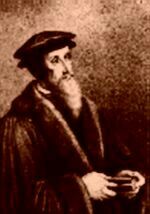 This is a “prophetic” word from Calvin out of the Institutes related to the postmodern sensibilities of Western Christianity. I’m not implying Calvin was speaking directly against postmodernism itself as a formal philosophy, as it had not yet been articulated, but this certainly does speak against its core tenets asserted today, to be sure. And I would say that ultimately, postmodernism, within the setting of Christianity, leaves a person without certainty that they will be accepted before God, which is exactly what Calvin explains in this section. The reason for this is because if you have no certainty and a house built on solid rock, ultimately, you will try and pick up the slack of uncertainty through your own deeds, works and effort in order to please God, which oddly enough, is what we see happening with many (though not all) postmoderns in the focus of various ministry focal points (i.e. deeds versus creeds).
Visit msnbc.com for Breaking News, World News, and News about the Economy
“Subject: Ever Think About a Different Domain Name?
Message: You know that David Westerfield is also the name of a convicted child raping murderer on death row at San Quentin? It was a huge case 6 or 7 years ago. Just a little ‘Fun-fact’ for you to chew on. Keep on keepin’ on.”
With all due respect … nooooo, really? It’s not as if I haven’t done a Google search on my name before 🙂
My response:
“Trust me, I’m very well aware of it 🙂 thanks for letting me know though … and no, I’m not changing my site name, haha :)”
I get quite a bit of traffic just from people searching that name and stumbling across my site actually … it’s a traffic driver. Why would I change it? 🙂
The below quote is taken from Monergism.com‘s section entitled An Overview of Reformed Theology.
“Reformed theology…
- presupposes God’s Word alone as our ultimate authority.
- stresses the sovereignty of God, that is, His reign over all things, meticulously determining (Eph 1:11) all that comes to pass (i.e. God is never taken by surprise).
- ephasizes a Christ-Centered proclamation of the gospel, that salvation is wholly of God, by grace alone through faith alone in Christ alone as revealed in the Scripture alone to the Glory of God alone.
- views the Bible as a redemptive-historical organic unfolding of revelation which is structured by three covenants (redemption, works and grace).
It goes without saying that those in the Reformed Tradition hold to the doctrines of grace (the five points of Calvinism), man’s helpless condition apart from Christ, the necessity of evangelism and the work of the Holy Spirit who (monergistically) quickens the dead to life through the preaching of the word as God turning their heart of stone to flesh, and opening their eyes to the excellencies of the gospel (uniting them to Christ). In other words, RT stresses the way the objective, written Word together with the inner, supernatural ministry of the Holy Spirit work together. For the Word without the illumination of the Holy Spirit remains a closed book. We (the church) cast forth the seed of the gospel and the Holy Spirit germinates it, so to speak, with the blood of Christ bringing forth life in people from every nation, tribe, language, and people (Rev 14:6). RT traces its historical and theological lineage back to the theology of Christ, Paul, Augustine and to the Protestant Reformation of the 16th Century.”
A few links with summed up statements concerning Reformed Theology:
- A Brief and Untechnical Statement of the Reformed Faith – B.B. Warfield
- Reformation Essentials – Michael Horton
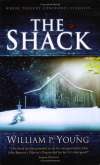 Quoting anonymously from the The Shack Facebook group, discussing my post found here, someone said in response to the person who posted my article as a discussion point: “____, I read a portion of your link and after about 7 paragraphs of beating around the bush and Paul-bashing, I quit. Why? Because I loved the book and I’m not going to let anybody’s negative comments ruin my experience in reading it. Why don’t you just stop busting our chops and give up? Most people love it; some don’t. We agree to disagree. End of debate.”
Ahh, pure intellectual integrity. Haha, Paul bashing? (Paul Young of course) Right. You decide. Instead of working through the difficulty of beliefs (or rather denials) that can lead people to hell when accepted, it seems some are content to just shut you out of the conversation altogether instead of seriously and honestly engaging any kind of debate because of what the book has done for them, at least emotionally speaking. Since when did the individual become the standard-bearer and authority on what’s truth or not? They just don’t want to talk about any criticism of it, even if it’s a legitimately serious issue concerned with none other than the very Gospel itself by which one is saved.
David, the Bread of Presence and the King of Glory
By David Westerfield
On April 17, 2009
In Scripture, Theology
Read More