
Joseph attributes the ultimate cause of his trials and being sold into slavery in Egypt by his brothers:
“And God sent me before you to preserve for you a remnant on earth, and to keep alive for you many survivors. So it was not you who sent me here, but God” (Genesis 45:8). “As for you, you meant evil against me, but God meant it for good, to bring it about that many people should be kept alive, as they are today” (Genesis 50:20).
God, in His righteousness, is sovereign not only over the ends, but also the means to accomplish those ends, even when they involve the sinful acts of others. Joseph knew this full well and God’s providential sovereignty in his trials is precisely the truth that gave him comfort in the midst of them, helping him to see past the trials to the ultimate Ordainer who does as He pleases in absolute rightness, without sin or imperfection. He does these things for His glory and our good. Sanctification and the Lord teaching us to rest in Him alone through trials can be a painful process. But the fruit is the holiness without which no one will see the Lord and the ultimate accomplishing of things we cannot foresee in our finiteness.
An even greater display of God’s providential sovereignty in the midst of trials is that of Christ. He was ordained before time to enter this world in humility.
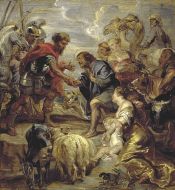 As I have been reading through Genesis the past couple of weeks, something has become clear to me as the story line has progressed. We all know the story of Jacob and Esau, well, at least some of you reading might. As Paul says and properly interprets of this story in the latter part of Genesis, particularly as he says it in Romans 9:10-13, “When Rebekah had conceived children by one man, our forefather Isaac, though they were not yet born and had done nothing either good or bad—in order that God’s purpose of election might continue, not because of works but because of him who calls— she was told, ‘The older will serve the younger.’ As it is written, ‘Jacob I loved, but Esau I hated.'”
 My
My