
 13Someone in the crowd said to him, “Teacher, tell my brother to divide the inheritance with me.” 14But [Jesus] said to him, “Man, who made me a judge or arbitrator over you?” 15And he said to them, “Take care, and be on your guard against all covetousness, for one’s life does not consist in the abundance of his possessions.” 16And he told them a parable, saying, “The land of a rich man produced plentifully, 17and he thought to himself, ‘What shall I do, for I have nowhere to store my crops?’ 18And he said, ‘I will do this: I will tear down my barns and build larger ones, and there I will store all my grain and my goods. 19And I will say to my soul, Soul, you have ample goods laid up for many years; relax, eat, drink, be merry.’ 20But God said to him, ‘Fool! This night your soul is required of you, and the things you have prepared, whose will they be?’ 21So is the one who lays up treasure for himself and is not rich toward God.” – Luke 12:13-21
There is a gospel that is proclaimed loudly everyday from the rooftops of this country, a gospel that is antithetical to the Gospel of Christianity. For years this competing gospel has been spoken as one in the same with the message of Christianity, particularly by many conservative Christians. Yet Jesus’s parable above makes it abundantly clear this is not the same message. The American Dream (or what could rightly be called the Gospel of Human Autonomy) is now touted as a fundamental human right from most within this country, conservative and liberal alike, and even from many of those within the evangelical movement. In fact, legislation has been instituted by many of our legislators to help those who have not yet fulfilled this dream (gospel) attain it by granting them government support and tax-payer funded benefits to get them on their way to this ultimate end. At the heart of our culture, we believe we are fundamentally entitled to this dream, as if it is the ultimate goal of human existence. But nothing can be farther from the truth.
 Or so he thought.
 Next follows the resurrection from the dead, without which all that has hitherto been said would be defective. For seeing that in the cross, death, and burial of Christ, nothing but weakness appears, faith must go beyond all these, in order that it may be provided with full strength. Hence, although in his death we have an effectual completion of salvation, because by it we are reconciled to God, satisfaction is given to his justice, the curse is removed, and the penalty paid; still it is not by his death, but by his resurrection, that we are said to be begotten again to a living hope, (1 Pet. 1: 3;) because, as he, by rising again, became victorious over death, so the victory of our faith consists only in his resurrection.
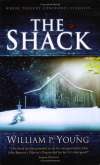 I want to quote people anonymously from The Shack Facebook group and add some commentary to each to show that this book is not viewed as a mere work of fiction. I believe these quotes are very instructive as to what the book is actually doing in culture and how it is indeed changing people’s understanding of who God is and how He relates to us. It seems many people’s understanding is actually changing based on Young’s understanding and portrayal of God.