
David Westerfield

Gospel. Culture. Technology. Music.


The Operating Principle of a Believers’ Life

“Do nothing from rivalry or conceit, but in humility count others more significant than yourselves. Let each of you look not only to his own interests, but also to the interests of others. Have this mind among yourselves, which is yours in Christ Jesus, who, though he was in the form of God, did not count equality with God a thing to be grasped, but made himself nothing, taking the form of a servant, being born in the likeness of men. And being found in human form, he humbled himself by becoming obedient to the point of death, even death on a cross. Therefore God has highly exalted him and bestowed on him the name that is above every name, so that at the name of Jesus every knee should bow, in heaven and on earth and under the earth, and every tongue confess that Jesus Christ is Lord, to the glory of God the Father.” – Philippians 2:3-11

Every one of us operates in our lives off of some set of principles, presuppositions, and some form of a worldview framework. If you are human, these things are simply unavoidable, inescapable. These principles affect the way we make long-term as well as short-term decisions in every realm of our lives. They come in thousands of different forms, in many variations, and are often very complex and intricate, to the point where sometimes we don’t even know or realize the principle upon which we are making the decisions we do. In addition, most of these principles are culturally informed, and therefore they are just assumed things with how we operate.

For believers though, Christ has broken into our respective cultural context, invaded our lives (in the positive sense obviously) and given us a principle upon which we can now make decisions that glorify Him and produce positive results in our own lives as well as the lives of those we affect with this truth. This is called the Gospel Principle. And this verse in Philippians is a great illustration of exactly this principle that Paul wants to convey to us. “Do nothing from rivalry or conceit, but in humility count others more significant than yourselves.” But how do we do this? By merely following Christ’s example? Not exactly.

Now I want to make clear that yes, Christ is our example for how we should live and obviously we should model our lives after His way of life. That is a “duh” sort of statement. The Gospel Principle goes further though because it does not simply say “Do this and you shall live.” That is Law. Have we not seen the history of Israel, how miserably a majority of Israelites failed at this? We are all sinners and cannot measure up to the demands of the Law by our own power.

This is exactly where the Gospel principle for believers comes in though. We look not at “What would Jesus do?” for our motivation (though I have absolutely no problem with anyone wearing a WWJD bracelet as a reminder to pursue Christ for our strength and power), but rather we go further with the Gospel and ask “What has Jesus done?” “What would Jesus do?” as great as it is of a reminder, in itself, does not give us any power to do what Paul commands, which is, “Do nothing from rivalry or conceit.” It is Law. There is no power in the Law to give us life. The Law is good (Romans 7) but it gives no life, and instead produces only death in us, because we are sinners and fail its demands.

Only the Gospel gives life. And by asking ourselves everyday, “What has Jesus done,” instead of “What would Jesus do?” we are reorienting ourselves with the power of what was accomplished at Calvary on our behalf to enable us to carry our the very thing Paul is commanding of us. Then and only then, by coming before Christ and looking to His work in His life, death, and resurrection can we do what is commanded in the Law. Apart from Him we can literally do nothing that is pleasing to Him. We are utterly reliant upon Him.

This is what Paul lays out for us. He does not give commands without it being under the power and principle of the life-giving Gospel of Christ, that He submitted Himself humbly to the cross, to bear our burden and free His people from hell. Paul’s commands and the Gospel itself are always interconnected in what he says in the Scriptures. Watch what he does.

“Have this mind among yourselves, which is yours in Christ Jesus, who, though he was in the form of God, did not count equality with God a thing to be grasped, but made himself nothing, taking the form of a servant, being born in the likeness of men. And being found in human form, he humbled himself by becoming obedient to the point of death, even death on a cross. Therefore God has highly exalted him and bestowed on him the name that is above every name, so that at the name of Jesus every knee should bow, in heaven and on earth and under the earth, and every tongue confess that Jesus Christ is Lord, to the glory of God the Father.”

Yes, Jesus is an example, and this passage itself is a great picture of how that is so. But the passage is more than an example. If it’s merely an example, we’re back to the Law again. The Gospel though is that Jesus perfectly fulfilled the Law out of love for us and frees us now (giving us the power through Him) to carry out its demands. Paul relates doing “nothing from rivalry or conceit,” with the principle of Christ emptying Himself on our behalf.

It is this finished work upon which we can come and find power in Him to perform that which is impossible for us to perform out of ourselves and our sinful nature. In fact, outside of this work is simply moralistic working and toiling that is in fact sin, according to Romans 14:23. There is no power in us and what we bring to God through our self-righteous, self-generated works. Paul is very careful to show that when he commands something it is always related to this Gospel Principle, because he knows no one will be able to accomplish what he commands outside of the power available in what Christ has accomplished for us.

So as believers, though we have many competing principles telling us how we should make decisions coming from our surrounding worldly culture, we have this principle, the Gospel Principle, that we can keep coming back to every moment of every day because the Gospel is the power of God for salvation to everyone who believes. As Tim Keller says, the Gospel is not only the way we’re saved at conversion, but it is also the way we’re changed progressively into the likeness of Christ. The Gospel is not merely the A-B-C’s of the Christian life, but the A-Z of the whole thing. Paul never leaves the Gospel behind when talking about how we should live in response to it, because it’s only through its power that we can do perform it.

This passage and others show that to be an inescapable fact. We love because He first loved us and sent His Son to be the propitiation for our sins, our wrath-bearer and our life-giver. Praise the Lord Jesus Christ for His matchless work to deliver us from hell and give us power and life in the here and now to do what is pleasing in His sight! May we daily return to Him and this Gospel Principle to base all our decisions upon.

“Have this mind [doing nothing from rivalry or conceit] among yourselves, which is yours in Christ Jesus [the Gospel Principle], who though he was in the form of God, did not count equality with God a thing to be grasped, but made himself nothing, taking the form of a servant, being born in the likeness of men. And being found in human form, he humbled himself by becoming obedient to the point of death, even death on a cross. Therefore God has highly exalted him and bestowed on him the name that is above every name, so that at the name of Jesus every knee should bow, in heaven and on earth and under the earth, and every tongue confess that Jesus Christ is Lord, to the glory of God the Father.”

Come to Christ and remind yourself of the power of what was definitively accomplished at Calvary for you, in order to live a life pleasing to Him. There is no power or hope without Him and His work. There is power only in the blood of Christ. Bow before your Lord and Savior who has completed His work for you, who sits at the right hand of the Father now, and let Him satisfy the deepest core of your being by His Spirit and allow Him to give you life through His death and resurrection. It is our only hope for doing anything that glorifies Him and brings Him honor.

Haven’t Been Blogging as Much Lately

As I’m sure you’ve noticed, I haven’t been doing as many posts. Part of this has to do with a sort of writers block. I feel as if I’ve exhausted many of the things I normally talk about. So I’m taking a step back and reassessing why it is I’m doing this to start with. Another part has been the demands of work recently. I’ve started working on our Sharepoint environments more and this has drained me to a great degree. And still yet, sometimes, I just don’t know what to say. I guess that would fall into the writers block category still. My brother has been in town, back from fighting in Iraq, so I’ve been spending time with him as well.

There are several pet topics that I like to write on, as you may have noticed. But I don’t know what else I can say about those things other than reiterating the same ideas, maybe with new thoughts, but more innovating instead of inventing (so to speak, not that I have anything original to say really, just repeating ideas I’ve heard mostly).

So I’m trying to reassess what other areas of theology (in particular) I should move into talking about. But that requires taking a step back and thinking through some things before lobbing ideas out there. Anyway, all that to say, I have kind of been taking a sabbatical from writing as much because I feel a little burned out I guess. I’ve also been reading more which takes away from writing time. So I’ll be back, I just don’t know what direction I want to take this site now.

A Look at Security Vulnerabilities in Web Applications

Fascinating look at how vulnerable web sites and web applications are and how they became so insecure.

You Cannot Argue With Evidence

(Original): http://www.independent.co.uk/environmen … 55406.html
(Archived): http://www.westerfunk.net/archives/envi … th%20Pole/

As we can see, according to this at least, the Earth’s climate is indeed warming. No one has questioned that. This is an indisputable fact. Yet, is it caused by man’s pollution, or way more dramatic forces, such as oceanic temperature fluctuations in combination with increases in solar energy output from the sun? I believe it would be the latter as fast as this is occurring. But I’m no climatologist. Yet oddly, that is what most meteorologists and climatologists will tell you. So shouldn’t we be spending federal money on preventing the effects of this unpreventable climatological warming instead of trying to cut these so-called green-house gases? Seems reasonable to me.

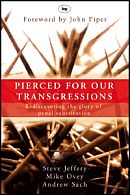
Pierced For Our Transgressions – A Review

A recent, thorough study of the American religious landscape conducted by the Pew Forum indicates that around 57% of self-labeled evangelicals now believe Jesus is not the only way to eternal life. This and other studies are showing the exact same thing: evangelicalism as a whole has lost, or is in the process of losing the Gospel as what makes it distinguishable from other “Christian” groups. This is saddening.

But it is no wonder when you have leaders, pastors and theologians in evangelicalism itself outright denying something that lies at the heart of the Gospel: the penal substitutionary atonement of Christ on the cross in behalf of sinners. Yes, evangelicals are beginning to deny this now! This excellent book, written by Steve Jeffery, Mike Ovey, and Andrew Sach is a very welcomed, thoughtful, timely and Biblically engaging response to those very people in showing them they are defying the Scriptures as well as historically what the church, its fathers and its doctors, have believed concerning this.

Just to give a short synopsis of the book, the first three chapters give a good thorough definition of what the doctrine is saying, the Biblical background of it from both the Old and New Testaments with a plethora of citations and explanations of the texts, and finally bringing all of this together into a theological framework in defense of the doctrine, respectively. All of this helps us understand the depths of how far God had to go in Christ in taking our sin upon Himself, taking the wrath in Himself that was due to us for that sin, and how we gain His righteousness through that work, by faith. Essentially, through faith and trust in Him, Christ takes our eternal punishment, in our place, and in return we get His reward for His work and toil! Unfathomable!

The fourth chapter then deals with the pastoral implications which I won’t go into as much here. In helping gain a better grasp of what Christians have believed historically concerning penal substitution, the fifth chapter outlines from church history, chronologically, what those who have gone before us said pertaining to this wonderful truth.

And that’s all just Part I.

All of Part 2 deals with answering the modern day critics who state that penal substitution is unbiblical, defies good modern-day common sense, and defies logic/reason. Many critics are making the old theologically liberal argument that penal substitution makes God the Father out to be a child abuser of His Son if He willingly sent Him to the cross to bear the wrath that was due to us. Unbelievable. How do we answer these people and the many other awful accusations of this wonderful truth? This book is a great place to start to know exactly how to do that.

This is was a wonderful read and a great resource to keep going back to in the future. The clear thinking, counter-arguments and Scriptural citations on the matter are so plentiful that it is really hard to negate the reality of this truth. In addition, though I initially thought this was going to be a high-level argumentation for penal substitution, I found it to be quite an easy read and not that difficult to keep up with at all. It’s one of those books that the authors are so smart, they can not only comprehend the most difficult theology, but can then take that theology and make it easily understandable for the average lay person.

In the future, unless God in His mercy and intervenes, turning evangelicals hearts’ back to Him again, this doctrine will continue to be lambasted as outdated, primitive, and downright offensive. We must be ready for the attacks on the heart of the Gospel, unfortunately, within many of our churches now. Believe me, it is coming. If theologians, pastors, and teachers are beginning to say these things now, it is only a matter of time before their cunning and deceitful arguments filter down into the thinking of the average person.

We must stand up for the Gospel now, in all of its difficult and soul-cutting truths, for the sake of the glory of God. Penal substitution is just one of these truths. In fact, it is a linchpin doctrine upon which our salvation rests, because how is it we can be saved unless God’s justice against our wrong-doing was satisfied by Christ bearing our burden in Himself on the tree?

This book is a great place to start really understanding this timeless, Biblical truth and re-examining your own personal understanding of it even. In addition, if you really want to understand the apologetic defense against many of these arguments, this book is a must read. Regardless of where you are coming from, it will be well worth your time and help focus and concentrate you on the center-piece of our faith: Jesus Christ, the Son of God.

Government Bail Out Legislation Gaining Ground

(Original): http://apnews.myway.com/article/20080624/D91GKJ4G1.html
(Archived): http://www.westerfunk.net/archives/econ … %20hurdle/

“When in doubt, the government will bail you out.” That seems to be a motto that is increasing in our society. And now it seems to have moved into our national government’s thinking as well. $300 Billion have now been approved by the Senate to bail people out of houses they couldn’t afford to start with. From the wise financial decisions of house-hungry consumers who enviously want to live in uptown Wherever, coupled with the deceitful financial practices of lenders approving loans they know the customer cannot afford based upon a simple formula (called the debt-to-income ratio), this mess has now resulted.

Yes, I feel sorry (in the merciful sense) for anyone who loses their house because they cannot afford the payment, even because of (possibly) bad decisions they made in getting to that point, though of course there are many exceptions. This is just not a good deal and as a sinful person looking at other people suffering, I feel sorry for them, and wish them the best. But should we be forced to pay for others’ bad decisions with our own tax dollars in the form of a $300 Billion bail out package? How is this not socialism, the redistribution of American income to bail out people who, for the most part, made bad financial decisions? This is a very unhealthy pattern of thinking that is seemingly more and more prevalent in our society, and now has reached the upper echelon’s of the government.

Consumers greedily pursue something through whatever means (in this case adjustable rate mortgages, which apparently they don’t even understand how they work before signing the papers, clearly), they get it, then can’t afford it, and then expect all of us, through the redistribution of wealth, to bail them out. Well, thanks to our fine politicians and their wise foresight, the consumers got their wish: $300 Billion. It still has a veto threat by Bush which is good. So it’s not sure. But just the fact that it has passed the Senate is telling about our leaders’ thinking on the matter.

Senator Chris Dodd is quoted in this article as saying that this legislation will “allow us to begin to put a tourniquet on the hemorrhaging of foreclosures in this country.” And in all honesty, right now, in the short term, it will probably solve some issues pertaining to the foreclosures. Maybe. Maybe not. But making this kind of legislation on a consistent basis is creating a way of dealing with (might I say, self-inflicted) disastrous situations that is very unsettling to our democracy, not merely the economy, though of course that is of great concern as well.

If the government is paying for your goods and services increasingly (now they are talking about nationalizing oil fields to be able to control the ebb and flow of the markets’ supply and demand), does it not follow the government can then demand of you, the citizen, certain things it could not have otherwise? I mean if they are paying your way, don’t you owe them something in return?

Socialism just doesn’t work in the long-run and impoverishes nations. I’m not sure exactly why it’s trendy and cool to be for socialism, because the very same people are also for humanitarian efforts, yet socialism defeats those very humanitarian efforts. It is almost like there’s a severe intellectual disconnect for some people with the theory of socialism and the resulting facts that have come out of it as an ideology.

How many case-in-point examples do we need in the world, both at the present time and from history, that it is a failed economic theory? North Korea? Cuba? Venezuela? The former USSR? Vietnam? Belarus? Myanmar? Burma? Do we really want to implement policies that have not worked so well historically in other countries? I’m just not understanding all of this. But once again, for believers in Christ, our hope is not in this world but in the one Christ has established and secured for us by His blood. That is a hope that will not shift with the winds of change in this country.

The Two-Pronged Attack to Solving our Energy Problems

Many from conservative and liberal camps are proposing two different ideas for our current energy conundrum: we either need to (from the conservative camp primarily) increase our domestic drilling and current output, or we need to (from the liberal camp primarily) create new sources of renewable energy so that we can become less dependent upon foreign oil, decrease “greenhouse gases,” and overall lower pollution (which I’m all for getting rid of nasty fumes, by the way).

It seems each group, respectively, pits one idea against the other as if they are opposed to each other. But why can’t we do both at the same time? One resolution solves the current short-term problem of domestic demand and oil speculators driving up the price of the commodity (based on the possibility of instability in the Middle East) and the other is the long-term solution to getting away from oil altogether, which I am for.

Different political groups dig in their heels against an opposing group just for the sake of the group, not for the sake of what logically makes sense to solve our problems. It’s that precise thinking that needs to change in this country. Yes, I have hang-ups with most liberal policies and cannot stand with them on most things. But there are some things that do logically make sense that we all need to be doing that conservatives and liberals both (as groups) seem to deny.

Yes, John McCain is a “conservative” advocate for the environment and defies the norm. I mean I sure wouldn’t consider him a true conservative because of some of his out of place policies. But regardless, he does at least seem to see both of these points very clearly: increase output now in the short term and begin implementing renewable energy infrastructure into the market for the future and security of this nation.

Wow … Burning Salt Water Could Cure Cancer

Battling the Unbelief of Anxiety

Excerpts from a sermon by John Piper entitled Battling the Unbelief of Anxiety located here: http://www.desiringgod.org/ResourceLibr … _Anxiety/.

Today’s text (Matthew 6:25-34) illustrates this with a specific evil condition of heart, namely, anxiety.

Stop for a moment and think how many different sinful actions and attitudes come from anxiety. Anxiety about finances can give rise to coveting and greed and hoarding and stealing. Anxiety about succeeding at some task can make you irritable and abrupt and surly. Anxiety about relationships can make you withdrawn and indifferent and uncaring about other people. Anxiety about how someone will respond to you can make you cover over the truth and lie about things. So if anxiety could be conquered, a lot of sins would be overcome.

But what is the root of anxiety? And how can it be severed? To answer that we go to our text in Matthew 6. Four times in this text Jesus says that we should not be anxious.

1. Verse 25: “Therefore I tell you, do not be anxious about your life.”
2. Verse 27: “And which of you by being anxious can add one cubit to his span of life?”
3. Verse 31: “Therefore do not be anxious.”
4. Verse 34: “Therefore do not be anxious about tomorrow.”

The verse that makes the root of anxiety explicit is verse 30: “But if God so clothes the grass of the field, which today is alive and tomorrow is thrown into the oven, will he not much more clothes you, O men of little faith?” In other words Jesus says that the root of anxiety is lack of faith in our heavenly Father. As unbelief gets the upper hand in our hearts, one of the results is anxiety.

So when Hebrews says, “Take heed lest there be in you an evil heart of unbelief,” it includes this meaning: “Take heed lest there be in you an ANXIOUS heart of unbelief.” Anxiety is one of the evil conditions of the heart that comes from unbelief. Much anxiety, Jesus says, comes from little faith. …

To the One Who Struggles Daily with Anxiety

So my response to the person who has to deal with feelings of anxiety every day is to say: that’s more or less normal. The issue is how you deal with them.

And the answer to that is: you deal with anxieties by battling unbelief. And you battle unbelief by meditating on God’s Word and asking for the help of his Spirit. The windshield wipers are the promises of God that clear away the mud of unbelief. And the windshield washer fluid is the help of the Holy Spirit.

Without the softening work of the Holy Spirit the wipers of the Word just scrape over the blinding clumps of unbelief. Both are necessary—the Spirit and the Word. We read the promises of God and we pray for the help of his Spirit. And as the windshield clears so we can see the welfare that God plans for us (Jeremiah 29:11), our belief grows strong and the swerving of anxiety smoothes out.

Anxieties We May Face

(with practical examples for combating them with Scriptural truths)

When I am anxious about some risky new venture or meeting, I battle unbelief with the promise: “Fear not for I am with you, be not dismayed for I am your God; I will help you, I will strengthen you, I will uphold you with my victorious right hand” (Isaiah 41:10).

When I am anxious about my ministry being useless and empty, I fight unbelief with the promise, “So shall my word that goes forth from my mouth; it will not come back to me empty but accomplish that which I purpose, and prosper in the thing for which I sent it” (Isaiah 55:11).

When I am anxious about being too weak to do my work, I battle unbelief with the promise of Christ, “My grace is sufficient for you, my power is made perfect in weakness” (2 Corinthians 12:9), and “As your days so shall your strength be” (Deuteronomy 33:25).

When I am anxious about decisions I have to make about the future, I battle unbelief with the promise, “I will instruct you and teach you the way you should go; I will counsel you with my eye upon you” (Psalm 32:8).

When I am anxious about facing opponents, I battle unbelief with the promise, “If God is for us who can be against us!” (Romans 8:31).

When I am anxious about being sick, I battle unbelief with the promise that “tribulation works patience, and patience approvedness, and approvedness hope, and hope does not make us ashamed” (Romans 5:3–5).

When I am anxious about getting old, I battle unbelief with the promise, “Even to your old age I am he, and to gray hairs I will carry you. I have made, and I will bear; I will carry and will save” (Isaiah 46:4).

When I am anxious about dying, I battle unbelief with the promise that “none of us lives to himself and none of us dies to himself; if we live we live to the Lord and if we die we die to the Lord. So whether we live or die we are the Lord’s. For to this end Christ died and rose again: that he might be Lord both of the dead and the living” (Romans 14:9–11).

When I am anxious that I may make shipwreck of faith and fall away from God, I battle unbelief with the promise, “He who began a good work in you will complete it unto the day of Christ” (Philippians 1:6). “He who calls you is faithful. He will do it” (1 Thessalonians 5:23). “He is able for all time to save those who draw near to God through him, since he always lives to make intercession for them” (Hebrews 7:25).

The Twisted Thought Process of the West

(Original): http://www.foxnews.com/story/0,2933,363434,00.html
(Archived): http://www.westerfunk.net/archives/poli … 0Abortion/

This is a clear, in-depth look at someone’s thinking concerning abortion, though by no means is this a blanket picture for all who have had one. It’s amazing to me that societies in the world who we, in our narcissistic, “cultured,” sophisticated, technologically savvy, Western mindset deem as coming from the old world of thinking (traditional societies), would themselves condemn this sort of behavior as barbaric and morally reprehensible (which it is). I’m not negating the fact that the situation itself is unbelievably emotionally difficult to deal with. I cannot imagine. This negates none of that. But here is the mother’s response as to why she would have one of her own children slaughtered in the womb: “Deciding to terminate at eight weeks was just utterly horrible [and I agree, but then she says] but I couldn’t cope with the anguish of losing another baby.”

She couldn’t cope with it.” That’s the part I want to focus on. And remember, I am not making light the fact that she has lost children. That is an unbelievable pain that I cannot fathom, especially in light of my son, Grayson. That would tear me apart. Regardless, her focus is not on the child and its well-being (possibly saving it through surgery or what ever and relying on an all-powerful God to provide their deepest needs regardless of the outcome), but the mother’s feelings are supreme, rationalizing the killing of her child. Her feelings are her god, dictating the slaughter of her own child. The slaughter of her own child. Just let that sink in. How is this any different than the child sacrifices to Baal in the Old Testament? The only difference is the “religion” is taken out of it and it’s a secular deed done in the service of the parents because of their inwardly bent focus and exaltation of themselves and their ultimate feelings, instead of self-sacrificially focusing on the well-being of the child who they themselves brought into this world and should take responsibility for.

Miraculously, the baby survived and she felt it kicking again after the abortion. But what was her initial response? Joy? Relief that her awful deed had not been accomplished because of the morally depraved nature of her sin? No. Anger! She was ticked the hospital had failed in the act of killing her child. No remorse, no repentance. It’s like paying a hit man to kill a person that may be a big inconvenience to you and they failed in their endeavor. How is this any different than that, really? Does anyone not see how unbelievably backward this is? It just makes my stomach turn to see our society heartily approve these acts, as if we’re morally upright and correct in doing so. It is the logic of Romans 1 in full bloom. “Though they know God’s decree that those who practice such things deserve to die, they not only do them but give approval to those who practice them” (Romans 1:32).

Then I like the doctors’ response in the article, that this couples’ situation is quite common (meaning the Lord is merciful in sparing people from killing their own children). “‘Women that have early terminations in weeks six, seven and eight, many times the pregnancy is so small that doctors miss removing the baby … The danger is that the failed attempt can damage the baby [well yeah, maybe it shouldn’t be done to start with?]. That is why these patients who get early terminations need follow-ups.'” In other words, after an abortion during these time-frames, go back for a follow-up “abortion” just to make sure you have really killed it off, because it may have been injured from the first attempt and still be alive, but severely wounded. Unbelievable.

The thinking on this is just so twisted, yet for many in our society, it’s just the way it is, a received, presuppositional doctrine of sorts. The manner in which the doctor speaks makes it sound as if the life being killed is so meaningless, even at that early stage of development, that you just need to make sure “the problem” is taken care of then before it grows and becomes an even larger problem. It’s just painted with nice, politically correct language, so as to make it seem like it’s a good, healthy practice. It’s defiled, depraved and reprehensible.

And it is no wonder Christianity is fading in the West: people’s hearts are becoming so hard because of the approval of sins like this, their consciences are being seared. How can they hear the message of redemption while giving hearty approval to things on this level of depravity? Now of course I believe that the Holy Spirit can overcome even the hardest of hearts and create that which is not there. But there can come a point even with the Lord where He just might frighteningly say, “Have it your way,” and give our society over to it’s lustful, selfish, greedy, soul-damning sins.

As a result, we would become unraveled morally, politically, socially, in every way if that happened. All the Lord has to do is lift His hand of restraint and we would fall headlong toward the worst forms of a depravity. It is His sheer mercy and grace we are allowed to stand at all even at this moment for the message we say to His face through committing acts like this.

Praise God that in His mercy He spared this couple from the emotional, moral, and psychological turmoil and scars of slaughtering one of their own children, even a child with a possible life-threatening disease. And I am glad she is delighted with her child now. But at the end of the article, it says, “Another scan a week later confirmed the baby also had kidney problems, but doctors told the couple the baby was likely to survive, so they decided he deserved another chance at life.” Unbelievable. “Well, I guess we can give him another chance,” basically. It seems even then, despite the Lord’s favor and mercy on them, they still don’t get it. There’s still room in the their thinking and thus their future for another child to come which has a similar disease, and they would have the same thing done.

Child-slaughter, infanticide, abortion, it’s all the same in the eyes of the Lord. Where does this stop? At what point do we say something is just flat out wrong, and upon what basis do we say it’s wrong? How much longer before the line gets pushed further and further back, to where we approve of baby-killings, toddler killings, mentally-retarded child killings, all in the name of love for the individual?

Well, actually, some of those things are happening now. Without a moral bedrock, a timeless foundation upon which to stand (the Scriptures), there is no telling how far a culture will stray from the ways of the Lord. It’s only a matter of time before things unravel, unless the Lord mercifully intervenes. May we call out to Him for the cleansing and healing of our land.

This is primarily why I cannot vote for a Democrat, because they give hearty legal and moral approval, granting wide access to these acts. If a group approves of something this morally depraved, how can I trust them to make other decisions for the good of the country when their moral compass is this twisted and off kilter? And despite the fact I am thrilled race relations have now reached the point in this country to where we can have an African American run for President (praise God!), I cannot vote for Obama, because he himself approves of one of the worst forms of abortion: Live Birth Abortions. Just check out this past entry: http://www.davidwesterfield.net/index.p … 112-005217

Page 63 of 118

Powered by WordPress & Theme by Anders Norén