
(Original): http://apnews.myway.com/article/20080624/D91GKJ4G1.html
(Archived): http://www.westerfunk.net/archives/econ … %20hurdle/
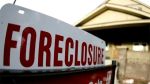 “When in doubt, the government will bail you out.” That seems to be a motto that is increasing in our society. And now it seems to have moved into our national government’s thinking as well. $300 Billion have now been approved by the Senate to bail people out of houses they couldn’t afford to start with. From the wise financial decisions of house-hungry consumers who enviously want to live in uptown Wherever, coupled with the deceitful financial practices of lenders approving loans they know the customer cannot afford based upon a simple formula (called the debt-to-income ratio), this mess has now resulted.
Yes, I feel sorry (in the merciful sense) for anyone who loses their house because they cannot afford the payment, even because of (possibly) bad decisions they made in getting to that point, though of course there are many exceptions. This is just not a good deal and as a sinful person looking at other people suffering, I feel sorry for them, and wish them the best. But should we be forced to pay for others’ bad decisions with our own tax dollars in the form of a $300 Billion bail out package? How is this not socialism, the redistribution of American income to bail out people who, for the most part, made bad financial decisions? This is a very unhealthy pattern of thinking that is seemingly more and more prevalent in our society, and now has reached the upper echelon’s of the government.
Consumers greedily pursue something through whatever means (in this case adjustable rate mortgages, which apparently they don’t even understand how they work before signing the papers, clearly), they get it, then can’t afford it, and then expect all of us, through the redistribution of wealth, to bail them out. Well, thanks to our fine politicians and their wise foresight, the consumers got their wish: $300 Billion. It still has a veto threat by Bush which is good. So it’s not sure. But just the fact that it has passed the Senate is telling about our leaders’ thinking on the matter.
Senator Chris Dodd is quoted in this article as saying that this legislation will “allow us to begin to put a tourniquet on the hemorrhaging of foreclosures in this country.” And in all honesty, right now, in the short term, it will probably solve some issues pertaining to the foreclosures. Maybe. Maybe not. But making this kind of legislation on a consistent basis is creating a way of dealing with (might I say, self-inflicted) disastrous situations that is very unsettling to our democracy, not merely the economy, though of course that is of great concern as well.
If the government is paying for your goods and services increasingly (now they are talking about nationalizing oil fields to be able to control the ebb and flow of the markets’ supply and demand), does it not follow the government can then demand of you, the citizen, certain things it could not have otherwise? I mean if they are paying your way, don’t you owe them something in return?
Socialism just doesn’t work in the long-run and impoverishes nations. I’m not sure exactly why it’s trendy and cool to be for socialism, because the very same people are also for humanitarian efforts, yet socialism defeats those very humanitarian efforts. It is almost like there’s a severe intellectual disconnect for some people with the theory of socialism and the resulting facts that have come out of it as an ideology.
How many case-in-point examples do we need in the world, both at the present time and from history, that it is a failed economic theory? North Korea? Cuba? Venezuela? The former USSR? Vietnam? Belarus? Myanmar? Burma? Do we really want to implement policies that have not worked so well historically in other countries? I’m just not understanding all of this. But once again, for believers in Christ, our hope is not in this world but in the one Christ has established and secured for us by His blood. That is a hope that will not shift with the winds of change in this country.
 Many from conservative and liberal camps are proposing two different ideas for our current energy conundrum: we either need to (from the conservative camp primarily) increase our domestic drilling and current output, or we need to (from the liberal camp primarily) create new sources of renewable energy so that we can become less dependent upon foreign oil, decrease “greenhouse gases,” and overall lower pollution (which I’m all for getting rid of nasty fumes, by the way).

 Nominal Christianity, that is, Christianity without Jesus as the single greatest of all people above all others for all time; Christianity that sees Jesus as just a man, and not as the God-man who effectually purchased sinners with His blood on the cross, is no Christianity at all. Christianity without Christ at its center, not as just a good teacher or moral founder, but as God Himself come in the flesh, is a utterly dead religion. And it is clear Obama’s form of Christianity is dead because of his stance on something so abominable. I find it contradictory that he claims Christianity as his religion of choice, seeing as how Christianity itself affirms with