
 When coming to the Scriptures, at least when we first start reading them, we all in some way read them through our cultural lens or the lens through which we want reality to exist. By nature, we all have assumptions about reality, human nature, the attributes of God, that are shaped and formed by the culture in which we grow up in. We also can just have personal presuppositions that may not be shaped by the culture, but are just thoughts we have about the way things are. Regardless, we have all of these preset beliefs through which we view the world and through which we view and read Scripture itself. It is very easy to go to the Scriptures with these assumptions and find passages (taken out of their respective context) that support these preset beliefs. However, the Scriptures themselves challenge every single one of our natural presuppositions.
For instance, some people have the presupposition that all mankind is basically good and can perfect himself. Therefore, based upon this, the person will make choices, make judgments, endorse political policies, and will think in such a way that supports this particular understanding of man. In addition, this person, when reading or preaching the Scriptures will ignore all of the hard, difficult, negative passages that cut against this presupposition, because that is what they have pre-decided about the nature of man.
However, Scripture is emphatic that we are depraved from the inside out. Jesus said Himself that it is not what goes into a man that makes him unclean but what comes out of him, meaning from his heart. Our natures are radically depraved, more than we can even believe. Romans 3:9-18 nails this on the head. When compared to the glory of God, there is no one good, not even one. This passage is the thesis statement of the Scriptures commentary on how sinful we really are.
Another example is predestination. Some people have pre-decided (no pun intended) from the very beginning that God in no way predestines some to salvation while justly leaving others to condemnation, though it is clearly written out in Romans 9. Therefore they will either ignore the passages that have the word “predestined” in them as something that was not intended in the English language, something we just can’t understand at all, or as something written only to the particular group the letter was intended. But more commonly, I’ve found, people will acknowledge that God predestines and then make a qualification that puts God in our debt: He chooses those who choose Him. That way it just sounds Biblical.
They say, “God chooses those in eternity past who He foreknows are going to choose Him.” Is that presupposition from Scripture though? The proponents would say of course. I ask, Where? They usually reply with Romans 8:29 which says, “For those whom he foreknew he also predestined to be conformed to the image of his Son, in order that he might be the firstborn among many brothers.” And I ask, Does that text say anything about the concept of God choosing those who choose Him? No. But they say, Yes, the word “Foreknow” says it all. Ah, but is that a presupposition your bringing to the text, and in particular to the word foreknow, that is no where to be found in Scripture, and definitely not in this verse?
The right thing to do in this case would be to study, research and understand the Biblical meaning of the word “know” throughout the Scriptures: God intimately sets His affection upon particular people. He says to Israel, “You only have I known of all the families of the earth.” (Amos 3:2) So those whom God “fore-loved” is the best way to read Romans 8:29-30. The passage does not say, “For those whom he foreknew [would choose Him] he also predestined to be conformed to the image of his Son,” but rather simply, “For those whom he foreknew he also predestined to be conformed to the image of his Son.” The word foreknew here is a verb as opposed to an adjective, it is something God does (rather has done). God foreknows specific people. God doesn’t just know data about people in the Scriptures (of course He knows that, He’s all-knowing!). Rather, the meaning of this is that He knows particular people, intimately, and those He knows intimately, He predestines to conformity with Christ. So now our presupposition is that God has fore-loved particular people and that can be found all over the Old and New Testaments, whereas God choosing those who choose Him can in no way be found as a stated, written-out presupposition in Scripture.
These are just a couple of examples why it is important for us all to obtain the fundamental beliefs we hold from Scripture and not our own thinking. We should always be challenging our assumptions in light of Scripture to see if they pass the test. Proverbs 3:5 says, “Trust in the LORD with all your heart, and do not lean on your own understanding.” Lord help us, by Your power, to do exactly that. We must read Scripture to know what it says about how we should think about ourselves, God, and redemption. It is how we conform ourselves to what it says, in order that we may be conformed to the image of Christ.
 As I was walking out the door this morning, the Today Show (no I don’t watch regularly) had a piece pertaining to cheating spouses and why it is or isn’t acceptable. The reason this was even brought up on the show was because of the new NY Governor (replacing the former governor who has been criminally indicted for being involved with a prostitution ring) admitting extra-marital affairs earlier in his marriage. In addition, his wife cheated on him as well. According to the “expert” they had on this morning, we need to be honest with our human nature when it comes to cheating. Is it really all that wrong? We need to understand that in the West we are in the minority of cultures around the world who do not accept adultery as morally correct. Therefore, maybe we should reconsider was the implication I gathered.
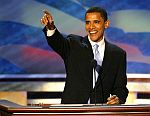 Nominal Christianity, that is, Christianity without Jesus as the single greatest of all people above all others for all time; Christianity that sees Jesus as just a man, and not as the God-man who effectually purchased sinners with His blood on the cross, is no Christianity at all. Christianity without Christ at its center, not as just a good teacher or moral founder, but as God Himself come in the flesh, is a utterly dead religion. And it is clear Obama’s form of Christianity is dead because of his stance on something so abominable. I find it contradictory that he claims Christianity as his religion of choice, seeing as how Christianity itself affirms with
 “Then Moses said to God, ‘If I come to the people of Israel and say to them, “The God of your fathers has sent me to you,” and they ask me, “What is his name?” what shall I say to them?’ God said to Moses, ‘I AM WHO I AM.’ And he said, ‘Say this to the people of Israel, “I AM has sent me to you.”‘” –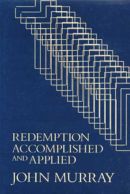
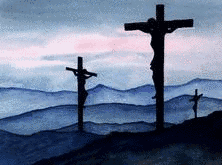 It is posited by many that God can either forgive sins or pay the debt for them, but that he cannot do both at the same time. The verses above speak utterly to the contrary though, particularly the statement, “Without the shedding of blood there is no forgiveness of sins.” This seems to indicate that God forgives sinners their infinite debt against Him precisely through a blood-shed sacrifice. And even more precisely in Hebrews, Christ is the long-awaited, final sacrifice of the Old Testament that has secured an eternal redemption by His blood because it is of infinite value and worth, offered on behalf of “those who are called” by the Father (